

Optimized Intelligent Scheduling

Dynamic Scheduling
In today’s fast-paced healthcare environments, efficient scheduling isn’t just a convenience—it’s a necessity. The Migranium Dynamic Scheduling System is a game-changing solution designed to tackle complex scheduling challenges in clinics, hospitals, and multi-specialty practices. By leveraging advanced algorithms, adaptable workflows, and user-centered design, this solution redefines how healthcare organizations manage time, appointments, and resources.

Product Owner &
UX Designer
As the lead for this project, I was responsible for conceptualizing and delivering a platform that seamlessly integrated into existing workflows while offering unmatched flexibility. My role involved:
-
Conducting in-depth user research with clinical staff and administrators to uncover pain points.
-
Designing intuitive wireframes and high-fidelity prototypes to address real-world challenges.
-
Managing developers to implement scalable, secure solutions tailored for healthcare.
-
Training & deploying the solution to existing and new clients
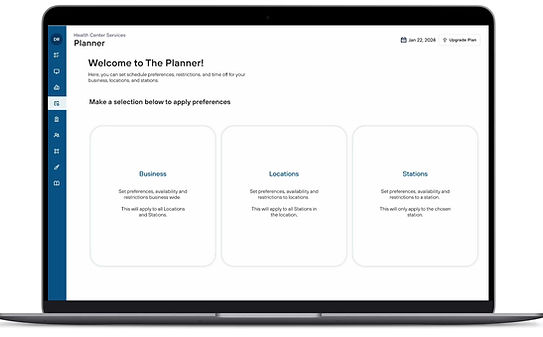
Features & Innovation
-
Dynamic Time Slots: Automatically adjusts availability based on historical data, current workloads, and practitioner preferences.
-
Real-Time Conflict Resolution: Instantly flags potential overlaps and suggests alternative slots.
-
Multi-Provider Coordination: Seamlessly schedules appointments involving multiple practitioners or locations.
-
Customizable Views: Tailored calendar displays by day, week, or month with color-coded tags for urgency, appointment type, or provider.
-
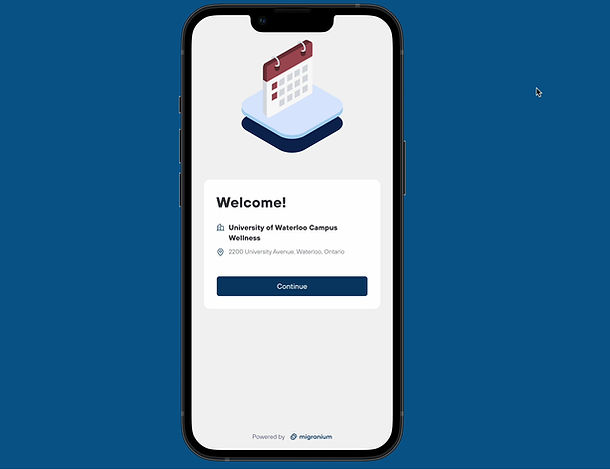
Secure Patient Access: Patients can view and manage appointments through a HIPAA-compliant portal
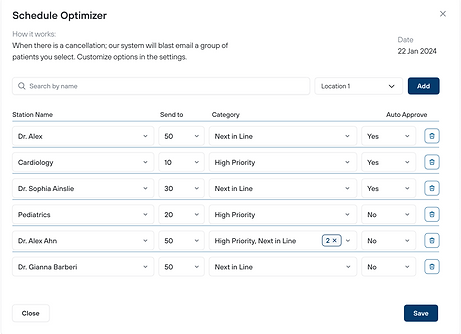
Schedule Optimizer and Flexible Settings

Client Experience
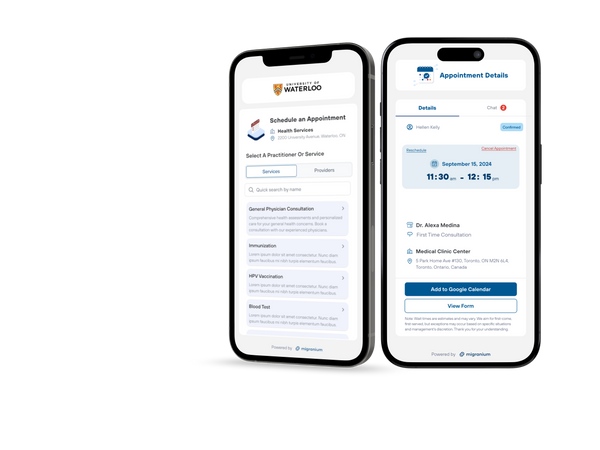
The Scheduling System has become a cornerstone of operational efficiency for healthcare providers using Migranium. By addressing the nuances of healthcare scheduling, the solution empowers organizations to deliver better care, reduce costs, and enhance the patient experience.
-
40% Reduction in scheduling errors within the first three months of deployment.
-
35% Faster Booking Times for administrative staff, allowing them to focus on higher-priority tasks.
-
20% Increase in patient retention rates due to streamlined processes and reduced wait times.